The Complete Guide to Commercial Storage Unit Cleaning: Protocols, Products, and Scheduling
Introduction: Why Commercial Storage Unit Cleaning Matters
Commercial storage facilities are essential for businesses needing secure, accessible, and flexible spaces. While security, climate control, and customer service often take center stage, one fundamental aspect is frequently overlooked: the cleaning and maintenance of storage units themselves. Cleanliness is not just about aesthetics—it directly impacts operational efficiency, tenant satisfaction, unit longevity, and even regulatory compliance. A well-maintained storage facility fosters customer trust, minimizes maintenance costs, and reduces risks such as pest infestations, mold, and property damage. For operators and facility managers, developing and executing an effective cleaning protocol is a strategic investment that pays dividends in reputation and operational reliability. This comprehensive guide explores the best practices, recommended products, and optimal scheduling strategies for commercial storage unit cleaning, designed specifically for operators looking to elevate their standards and maximize value for tenants. Whether you’re overseeing a large-scale facility or a smaller operation, these insights will empower you to adopt a results-driven approach to cleaning that goes far beyond the basics.
Understanding the Unique Cleaning Needs of Commercial Storage Units
What Sets Commercial Storage Apart?
Unlike residential storage, commercial storage units are exposed to a variety of goods, packaging materials, and sometimes hazardous substances. Businesses may store inventory, sensitive documents, electronics, or even machinery. Each of these has unique cleaning implications:
- High Turnover: Quick tenant transitions require speedy and thorough cleaning.
- Varied Contents: Residue from packaging, chemicals, or machinery may be left behind.
- Regulatory Oversight: Some stored materials are subject to health and safety regulations.
- Business Hours Operations: Cleaning often needs to be scheduled around clients’ access times.
Common Contaminants and Problem Areas
- Dust and Debris: Accumulates quickly, especially with cardboard and wooden pallets.
- Pest Droppings: Vulnerable areas if food products or organic materials are stored.
- Spills and Stains: From oils, lubricants, or leaking containers.
- Mold and Mildew: Especially in humid climates or poorly ventilated units.
- Odors: Lingering smells from previous tenants or spilled substances.
Core Cleaning Protocols for Commercial Storage Units
Step 1: Pre-Cleaning Assessment
- Inspect vacated units for damage, residue, and unusual odors.
- Identify any hazardous materials and follow regulatory disposal guidelines.
- Document issues with photos for records and tenant accountability.
Step 2: Removal of Debris and Contents
- Remove all left-behind items and debris. Use heavy-duty gloves and proper lifting equipment.
- Separate recyclables, hazardous waste, and general trash according to facility policy.
Step 3: Dry Cleaning
- Sweep floors thoroughly with industrial brooms.
- Vacuum corners, walls, and inaccessible areas with HEPA-filter vacuums to minimize airborne dust.
- Dust shelving, ledges, and light fixtures.
Step 4: Wet Cleaning and Disinfection
- Mop floors with a degreasing solution suitable for concrete or the existing floor finish.
- Wipe down doors, handles, and frequently touched surfaces with an EPA-approved disinfectant.
- Spot-clean stains or spills with appropriate stain removers.
Step 5: Odor Neutralization
- Use enzymatic cleaners or odor-neutralizing foggers, especially after storage of organic materials.
- Ventilate the unit by opening doors and, if possible, using portable fans.
Step 6: Final Inspection and Documentation
- Review the unit for cleanliness, signs of pests, or residual odors.
- Log the cleaning date, procedure, and any issues in your facility management software.
Recommended Products and Tools for Commercial Unit Cleaning
Essential Cleaning Products
- Multi-surface Degreasers: For removing oil, grease, and tough residues.
- EPA-Approved Disinfectants: To eliminate bacteria, viruses, and fungi.
- Enzymatic Cleaners: Effective on organic stains and odors.
- Stain Removers: For targeted spot cleaning.
- Odor Neutralizers: Foggers or sprays for persistent smells.
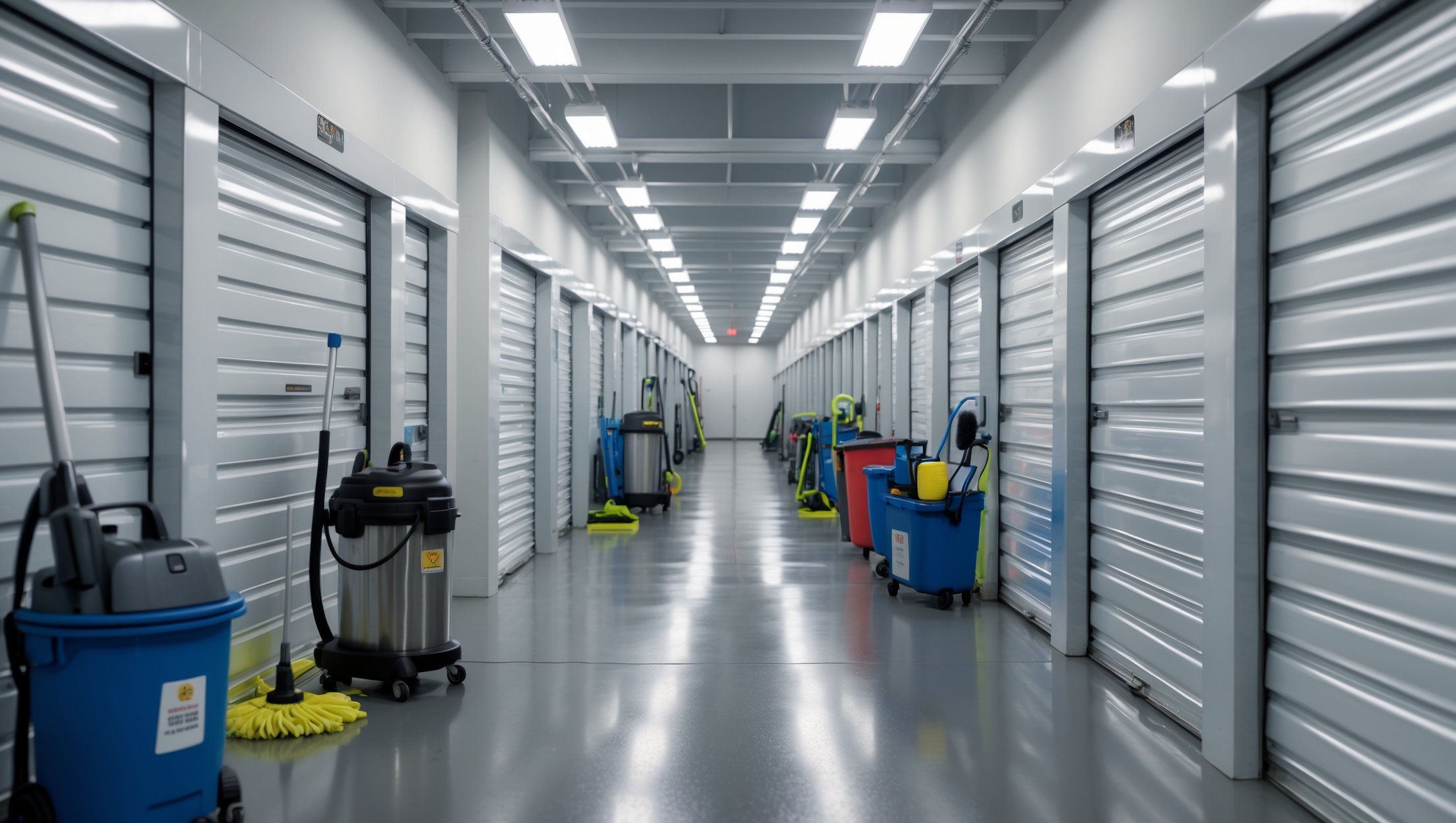
Must-Have Equipment
- HEPA Vacuums: Capture fine dust and allergens.
- Industrial Brooms and Mops: For robust floor cleaning.
- Scrubbers: For tough stains on concrete or metal surfaces.
- Portable Fans: To aid in drying and ventilation.
- Personal Protective Equipment (PPE): Gloves, masks, goggles for staff safety.
- Waste Disposal Carts: Segregate waste efficiently for recycling or hazardous disposal.
Advanced Solutions
- Electrostatic Sprayers: For rapid disinfection of large areas.
- Steam Cleaners: For deep cleaning without chemicals.
- Humidity Monitors: Prevent mold by monitoring and managing unit moisture levels.
Scheduling Strategies: Frequency and Best Practices
Turnover Cleaning vs. Routine Maintenance
- Turnover Cleaning: Deep clean every unit after tenant move-out.
- Routine Maintenance: Regularly inspect and spot-clean units, especially those rented long-term.
Recommended Cleaning Frequency
- Vacated Units: Clean immediately after move-out, before the next tenant views or moves in.
- Occupied Units: Offer optional annual or semi-annual cleaning, with tenant consent.
- High-Traffic Areas: Hallways, entrances, and loading zones should be cleaned daily or weekly.
Scheduling for Minimal Disruption
- Coordinate with commercial tenants to clean outside business hours where possible.
- Post clear cleaning schedules in common areas and communicate via email or digital portals.
- Use software to automate reminders and track cleaning history for each unit.
Compliance, Documentation, and Staff Training
Regulatory and Insurance Considerations
- Ensure cleaning protocols comply with OSHA, EPA, and local health regulations.
- Maintain records to demonstrate compliance during audits or insurance claims.
- Use Material Safety Data Sheets (MSDS) for all chemical products.
Documentation Best Practices
- Keep digital logs of cleaning dates, products used, and responsible staff.
- Photograph units before and after cleaning, especially when resolving tenant disputes.
- Archive inspection and cleaning reports for at least three years.
Staff Training Essentials
- Provide comprehensive onboarding on cleaning protocols and equipment use.
- Conduct annual refresher courses on safety, chemical handling, and emergency procedures.
- Encourage staff feedback to improve cleaning efficiency and safety.
Cost Management: Budgeting for Cleaning Operations
Fixed vs. Variable Costs
- Fixed Costs: Equipment purchase, staff training, and PPE.
- Variable Costs: Cleaning agents, waste disposal, and overtime for after-hours cleaning.
Optimizing Your Cleaning Budget
- Buy cleaning products and equipment in bulk for cost savings.
- Schedule preventive maintenance to reduce emergency cleaning expenses.
- Track time spent per unit to identify process improvements.
- Consider outsourcing deep cleaning for larger facilities during peak turnover periods.
ROI of a Clean Facility
- Reduces vacancy periods by making units more attractive to prospective clients.
- Minimizes repair costs due to damage from neglect, pests, or mold.
- Enhances reputation, leading to positive reviews and repeat business.
Pest Prevention as Part of the Cleaning Protocol
Integrated Pest Management (IPM)
- Regularly inspect for droppings, nests, or chew marks during cleaning.
- Seal cracks and gaps in units to reduce entry points.
- Use non-toxic traps and baits as a preventive measure.
- Document and escalate any pest findings to professional exterminators promptly.
Communication with Tenants: Setting Expectations
Transparency and Tenant Satisfaction
- Inform tenants of cleaning schedules and protocols upon move-in.
- Offer optional cleaning or odor removal services for occupied units.
- Respond quickly to tenant reports of cleanliness issues or odors.
- Encourage feedback to continually refine cleaning processes.
Conclusion: Elevating Standards Through Professional Cleaning
Effective commercial storage unit cleaning goes far beyond a quick sweep and mop. It’s a comprehensive, strategic process that requires the right products, equipment, staff training, documentation, and scheduling. Clean units are safer, more appealing to tenants, and less likely to suffer from long-term damage or pest infestations. By investing in robust cleaning protocols and staying proactive about routine maintenance, facility operators can enhance client satisfaction, reduce turnover, and position themselves as leaders in a competitive marketplace. The key is to view cleaning not just as a cost, but as a vital pillar of your business model—one that protects your property, your reputation, and your bottom line. Whether you manage dozens of units or thousands, adopting these best practices will ensure your storage facility remains clean, compliant, and compelling to current and prospective commercial clients alike. Make professional cleaning a core part of your operational strategy, and you’ll reap the rewards in efficiency, customer loyalty, and peace of mind.