Moving Equipment Maintenance: Extending the Lifespan of Dollies, Hand Trucks, and Ramps
Introduction: Why Moving Equipment Maintenance Matters
In the moving and storage industry, equipment like dollies, hand trucks, and ramps are the unsung heroes of efficiency. These tools bear the brunt of daily operations, carrying heavy loads, navigating tight spaces, and enduring frequent use. Yet, they’re often overlooked until a wheel jams mid-move or a ramp buckles under pressure. Neglecting regular maintenance not only leads to costly breakdowns and safety risks but also shortens the lifespan of your investment, impacting your bottom line and reputation.
This guide delivers a comprehensive, practical approach to maintaining your moving equipment fleet. Whether you manage a large facility or a small moving team, you’ll find actionable steps for inspecting, maintaining, repairing, and storing key items like dollies, hand trucks, and ramps. We’ll break down best practices, recommended schedules, troubleshooting tips, and the telltale signs it’s time for repairs or replacement. With consistent care, your equipment will stay in peak condition—ensuring safer moves, happier staff, and satisfied customers.
Understanding the Core Equipment: Types and Vulnerabilities
Dollies
Dollies come in several varieties, including appliance dollies, utility dollies, and furniture dollies. Each faces unique stressors—appliance dollies handle extreme weight, utility dollies endure frequent turning, and furniture dollies deal with broad, uneven loads. Key vulnerabilities include wheel wear, frame bending, loose fasteners, and grip deterioration.
Hand Trucks
Hand trucks are vertical movers with two wheels and a small platform. Their main vulnerabilities are tire degradation, axle stress, handle wear, and frame warping from overloading or improper use.
Ramps
Loading ramps, whether portable or fixed, must withstand heavy rolling loads and weather exposure. Key risks include surface warping, corrosion (for metal ramps), splintering (for wooden ramps), and hinge or locking mechanism failure.
Developing a Preventative Maintenance Program
Effective maintenance keeps equipment reliable, extends lifespan, and prevents unexpected downtime. Establish a program that includes:
- Scheduled Inspections: Daily visual checks and monthly in-depth inspections.
- Routine Cleaning: Removing dirt, debris, and buildup that accelerate wear.
- Lubrication: Keeping moving parts gliding smoothly to avoid friction damage.
- Timely Repairs: Addressing minor issues before they escalate into major failures.
- Record Keeping: Documenting inspections, repairs, and replacement dates for accountability and warranty purposes.
Daily and Weekly Maintenance Tasks
Daily Visual Inspection Checklist
- Check for obvious damage: bent frames, cracked welds, or broken handles.
- Spin wheels to ensure smooth movement; listen for grinding or squeaking.
- Inspect tires for flat spots, low air (if pneumatic), or worn tread.
- Ensure all fasteners are tight; look for missing bolts or loose nuts.
- Test ramp hinges and latches for secure operation.
Weekly Cleaning and Lubrication
- Wipe down frames with a damp cloth to remove dust and chemical residues.
- Clean wheel treads to remove debris that can cause flat spots or imbalance.
- Apply light machine oil to axles, wheel bearings, and ramp hinges.
- Disinfect handles and grips to maintain hygiene, especially for shared equipment.
Monthly and Seasonal Deep Maintenance
Monthly Maintenance Tasks
- Remove wheels from dollies and hand trucks for thorough bearing inspection and cleaning.
- Check frame alignment with a level or straight edge; gently realign minor bends.
- Test all moving parts for excessive play or looseness.
- Examine ramp surfaces for warping, rust, or splintering.
- Apply anti-rust spray or paint to metal components as needed.
Seasonal Considerations
- Winter: Salt and moisture can corrode metal parts—wash equipment more frequently and dry thoroughly before storage.
- Summer: Heat can dry out rubber tires and grips—inspect for cracking and replace if necessary.
Identifying Signs of Wear and When to Repair or Replace
Common Signs of Equipment Wear
- Dollies/Hand Trucks: Wobbling wheels, bent axles, frame cracks, loose or missing hardware, worn grips.
- Ramps: Warping, rust patches, surface cracks, loose hinges, failing safety latches.
Repair vs. Replace: Making the Call
- Repair: Address minor issues like loose hardware, surface rust, or minor bent frames promptly.
- Replace: If cracks compromise structural integrity, wheels repeatedly fail, or safety mechanisms no longer function reliably, replace the equipment.
Essential Tools and Supplies for Equipment Maintenance
- Socket and wrench sets for tightening/loosening bolts and nuts.
- Lubricating oil and rust inhibitors.
- Replacement wheels, bearings, and grip covers.
- Wire brushes and sandpaper for removing rust and smoothing rough edges.
- Heavy-duty cleaner and disinfectant.
- Protective gloves and safety glasses for maintenance work.
Proper Storage Practices for Longevity
How and where you store your dollies, hand trucks, and ramps is just as important as how you maintain them. Follow these guidelines:
- Dry, Covered Storage: Prevent rust and material degradation by keeping equipment sheltered from rain and direct sunlight.
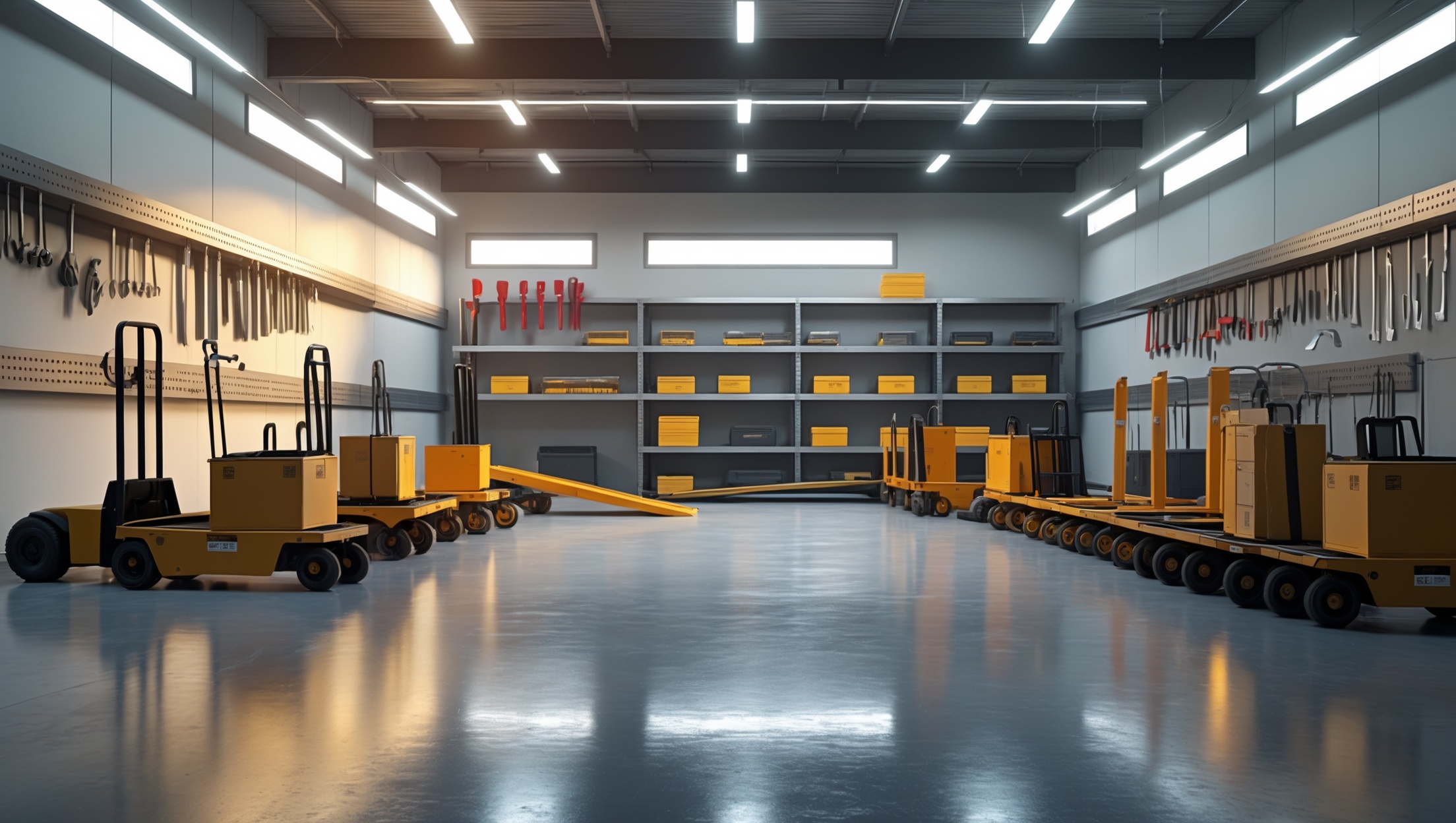
- Organized Racks: Use wall-mounted hangers for hand trucks, dollies, and ramps to prevent accidental damage and make inspections easier.
- Climate Control (if possible): Reduces moisture-related issues and rubber deterioration.
- Accessibility: Store most-used equipment at waist height to minimize strain during retrieval and return.
Training Staff on Equipment Care
Consistent equipment care depends on knowledgeable staff. Provide hands-on training that covers:
- How to perform daily and weekly inspections.
- Identifying early warning signs of wear or damage.
- Proper cleaning, lubrication, and storage techniques.
- Reporting and documenting issues promptly.
- Safe lifting and handling techniques to minimize accidental damage.
Encourage a culture of accountability—reward teams for maintaining equipment longevity, and ensure everyone understands the cost and safety implications of neglect.
Documenting Maintenance: Simple Record-Keeping Methods
Track all inspections, repairs, and replacements using:
- Digital spreadsheets or maintenance management apps for larger operations.
- Paper logbooks attached to storage racks for smaller teams.
- Maintenance tags attached to equipment summarizing last service date.
Documentation supports warranty claims, helps plan replacements, and identifies recurring issues needing process improvement.
When to Upgrade: Evaluating New Equipment
Despite the best maintenance, equipment eventually reaches end-of-life. Evaluate upgrading when:
- Ongoing repairs exceed 30% of replacement cost.
- Safety standards or customer needs evolve (e.g., demand for lightweight or ergonomic designs).
- New technology offers significant efficiency or safety gains.
Before purchasing, review product reviews, warranty terms, and compatibility with your existing fleet. Dispose of old equipment responsibly—recycle metal, donate usable items, or contact manufacturers for take-back programs.
Conclusion: Investing in Longevity and Safety
Well-maintained dollies, hand trucks, and ramps are the backbone of any moving and storage operation. They protect your team from injuries, your clients’ belongings from damage, and your company’s bottom line from unnecessary expenses. By establishing a robust maintenance program, training your staff, and keeping detailed records, you’ll maximize the value and safety of every piece of equipment.
Remember, preventative care is always more cost-effective than emergency repairs or replacements. The time and resources you invest in regular inspections, cleaning, lubrication, and timely repairs will pay off with longer-lasting, more reliable tools. This proactive approach not only extends equipment lifespan but also strengthens your reputation for professionalism and safety in a competitive industry.
Make equipment maintenance a cornerstone of your operational culture. With each check, clean, and repair, you’re building a safer, more efficient, and more profitable moving and storage business—one that customers and staff alike can trust for years to come.