Storage Unit Fire Prevention: Practical Strategies for Facility Owners
Introduction: The Critical Importance of Fire Prevention in Storage Facilities
Fire is one of the most devastating risks facing storage facility owners. A single incident can cause tremendous property damage, loss of customer belongings, insurance headaches, and significant reputational harm. Unlike many other threats, fires can spread rapidly and unpredictably, often before first responders can intervene. With modern storage facilities housing a vast array of contents—ranging from household goods to business inventory, documents, and sometimes even vehicles—the stakes for effective fire prevention have never been higher.
Yet, many owners and managers underestimate the complexity of fire risks in self-storage environments. Combustible materials, electrical equipment, climate systems, and tenant behaviors all contribute to a unique risk profile. A robust fire prevention strategy is not only about meeting code compliance; it’s about proactively identifying hazards, investing in appropriate infrastructure, training staff, and preparing for emergencies. In this guide, we’ll dive deep into actionable fire prevention measures specifically tailored for storage facilities, equipping you to protect your property, your clients’ assets, and your business reputation.
Understanding Fire Risks Unique to Storage Facilities
Common Sources of Fire in Storage Units
Storage facilities face a distinct set of fire hazards due to the diversity of items stored and the building’s design. Key sources include:
- Improperly stored items: Flammable liquids, old paint, propane tanks, or fireworks, which tenants may attempt to hide.
- Electrical faults: Outdated wiring, overloaded circuits, or faulty lighting systems in corridors or units.
- Climate control equipment: Malfunctioning HVAC systems or portable heaters.
- Arson and vandalism: Unsecured perimeters increase the risk of intentional fires.
- Smoking: Staff or customers disregarding no-smoking policies.
Why Storage Facility Fires are So Destructive
Several factors make storage unit fires especially dangerous and costly:
- High fuel load: Units packed with boxes, paper, furniture, and plastics burn rapidly.
- Lack of early detection: Units are often unoccupied, so fires go undetected longer.
- Ventilation design: Corridors and roll-up doors can channel smoke and flames.
- Delayed access: Firefighters may struggle to access units quickly due to locks or building layout.
Infrastructure and Equipment: Building a Fire-Resistant Facility
Choosing Fire-Resistant Materials
When constructing or renovating a storage facility, prioritize materials that resist ignition and slow fire spread, such as:
- Metal partitions and doors: These offer better fire resistance than wood or drywall.
- Concrete block walls: Especially for perimeter and dividing walls.
- Fire-rated insulation and ceiling panels: These materials add crucial minutes for emergency response.
Sprinkler Systems: Types and Best Practices
Automatic fire sprinklers are among the most effective defenses against fire. Key considerations:
- Wet pipe systems: Always filled with water, providing immediate response. Ideal for climate-controlled facilities.
- Dry pipe systems: Pipes are filled with air until a fire triggers the release of water. Suitable for unheated units in cold climates.
- Regular testing and maintenance: Schedule annual inspections and flow tests. Log all maintenance for insurance compliance.
Fire Extinguishers: Placement and Types
Install portable fire extinguishers throughout the facility:
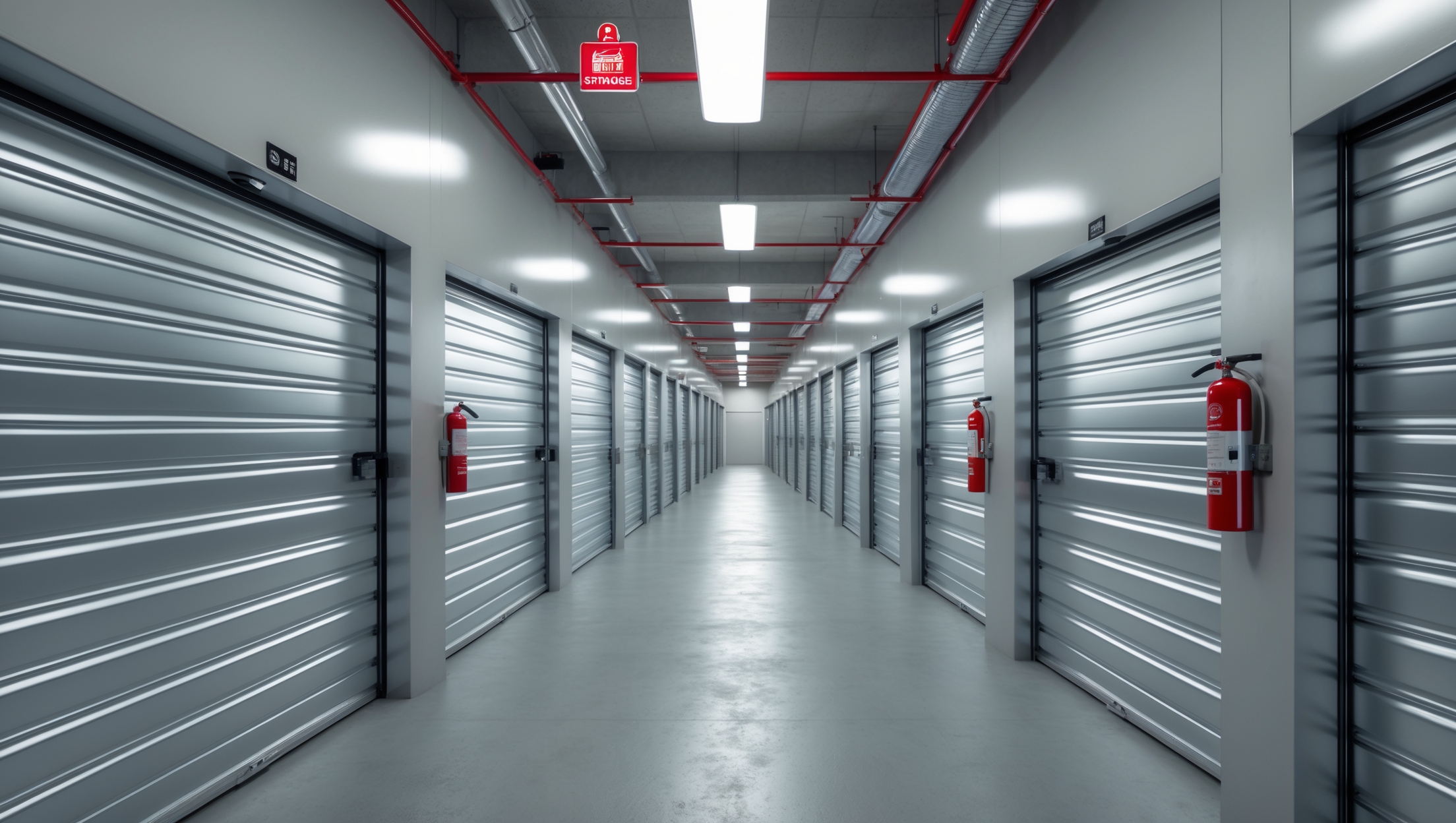
- Class A/B/C extinguishers to handle wood, liquids, and electrical fires.
- Mount at visible, accessible locations—especially near entrances, offices, and high-risk zones.
- Inspect monthly and service annually. Train staff on correct usage.
Fire Alarms and Detection Systems
Early detection is essential. Best practices include:
- Install smoke detectors in hallways, offices, and common areas.
- Integrate alarm systems with remote monitoring or local fire departments.
- Test alarms monthly and replace batteries or sensors as needed.
Operational Policies: Reducing Fire Hazards Daily
Tenant Agreements and Prohibited Items
Clearly outline in your rental agreements which items are strictly prohibited:
- Flammable or combustible liquids (gasoline, solvents, oil)
- Explosives (fireworks, ammunition)
- Propane tanks and gas cylinders
- Perishable foods and live plants
Regularly remind tenants of these restrictions through signage, emails, and onboarding materials.
Access Control and Surveillance
Limit unauthorized access and deter arson by:
- Maintaining secure entry points (keypads, gates, security doors)
- Installing 24/7 video surveillance in corridors, entrances, and exterior areas
- Conducting routine patrols, especially after hours
Housekeeping and Clutter Management
Clutter in hallways, stairwells, or mechanical rooms increases fire risk. Best practices:
- Keep all escape routes and fire exits clear at all times.
- Enforce strict no-storage rules in common areas.
- Schedule regular cleaning and inspections to remove debris and trash.
Staff Training and Emergency Preparedness
Fire Safety Training for Employees
Your staff should be your first line of defense. Comprehensive training includes:
- Identifying fire hazards during daily operations
- Proper use of fire extinguishers (hands-on drills annually)
- How to activate alarm systems and call emergency services
- Evacuation procedures for customers and staff
Conducting Fire Drills
Schedule at least one fire drill per year. Steps:
- Simulate different fire scenarios (office, corridor, storage unit)
- Time evacuation and identify bottlenecks
- Revise emergency plans based on lessons learned
Developing a Comprehensive Emergency Plan
Your plan should cover:
- Clear evacuation maps for staff and tenants
- Designated assembly points outside the building
- Emergency contact list (fire, police, utility providers)
- Roles and responsibilities for each staff member during an emergency
Regular Inspections and Maintenance Routines
Monthly and Annual Fire Safety Inspections
Proactive inspections identify risks before they become disasters. Key tasks:
- Check all extinguishers for pressure and accessibility
- Test smoke detectors, alarms, and emergency lighting
- Inspect electrical panels for overloading or damage
- Review housekeeping and clutter in all areas
- Assess clear access to fire exits
Maintaining Fire Safety Equipment
Partner with certified fire safety contractors for:
- Annual sprinkler and alarm system testing
- Extinguisher servicing and recharging
- Documentation of all inspections for insurance and code compliance
Working with Local Fire Authorities and Compliance
Understanding Local Codes and Requirements
Stay up to date on requirements for:
- Fire suppression systems and alarm standards
- Maximum occupancy and access regulations
- Signage and emergency lighting placement
Consult your local fire marshal for annual reviews and guidance on best practices.
Fire Department Pre-Planning Visits
Invite your local fire department to tour your facility. Benefits include:
- Familiarity with building layout and hazards
- Advice on improvements and code updates
- Faster, more effective emergency response if a fire occurs
Leveraging Technology for Enhanced Fire Safety
Smart Detection and Monitoring Systems
Modern tech can catch fires early and alert you instantly:
- Networked smoke and heat detectors with mobile alerts
- Integrated video analytics to identify smoke or flames
- Automated system shutdowns for HVAC and electrical in event of fire
Remote Facility Management
Cloud-based facility management systems can:
- Alert you to fire alarm activations in real time
- Allow remote lockdown or unlocking of facility for emergency responders
- Provide digital logs of fire safety checks and maintenance
Insurance Considerations: Reducing Risk, Lowering Premiums
Fire Prevention as an Insurance Requirement
Many insurers require proof of fire safety systems and policies before issuing or renewing a policy. Essential documentation includes:
- Inspection and maintenance logs
- Staff training records
- Photos of equipment and signage
How Fire Prevention Lowers Your Costs
Strong fire prevention measures can:
- Qualify you for premium discounts
- Reduce deductibles and claims denials
- Improve your standing with commercial lenders
Case Studies: Real-World Lessons in Fire Prevention
Case Study #1: Quick Response Saves a Facility
At a midwestern storage facility, an electrical fire broke out in a corridor. Because of well-maintained smoke detectors and a recently serviced sprinkler system, the fire was contained within one unit. Staff training and clear emergency plans meant all customers were safely evacuated, and damage was limited to a single area. Insurance adjusters praised the facility’s detailed records and awarded a claim with minimal delay.
Case Study #2: Lax Policies Lead to Major Loss
In another instance, a lack of prohibited item enforcement allowed a tenant to store flammable liquids. A small fire, possibly from a discarded cigarette, ignited these materials and quickly spread through multiple units. Poor alarm maintenance delayed detection, resulting in significant losses and a protracted insurance dispute. The owner faced steep premium increases and reputational damage.
Conclusion: Building a Culture of Fire Safety in Storage Facilities
Fire prevention is not a one-time investment—it’s an ongoing commitment that every storage facility owner and manager must embrace. The cost and effort of robust fire safety measures are negligible compared to the havoc a single fire can wreak on your property, tenants, and business future. By understanding the unique fire risks present in storage environments, investing in the right infrastructure, and enforcing strong operational policies, you lay the groundwork for a safer, more secure facility.
Regular staff training, clear tenant communication, and proactive maintenance routines ensure that fire prevention becomes part of your organizational culture. Take advantage of modern technology and maintain close relationships with local fire authorities to stay ahead of evolving risks. Remember, effective fire prevention not only protects your business assets but also builds trust with your customers and lowers your insurance costs.
Don’t wait until disaster strikes to take action. Start today by reviewing your current fire safety plan, scheduling an inspection, and updating your emergency protocols. The effort you invest now will pay dividends in peace of mind, financial security, and the continued success of your storage facility for years to come.