Navigating Storage Facility Access Control: Modern Solutions, Compliance, and Best Practices
Introduction: Why Access Control Is the Heart of Modern Storage Facilities
Security is the cornerstone of the moving and storage industry, but in today’s increasingly digital landscape, traditional locks and keys no longer suffice. Customers expect seamless, secure, and convenient access to their stored belongings, and facility operators must balance these expectations with operational efficiency and regulatory compliance. Modern access control systems—ranging from electronic gates and smart locks to integrated software platforms—have become indispensable for facility managers aiming to stay competitive, reduce liability, and foster customer trust.
However, implementing or upgrading these systems involves navigating a maze of technological options, compliance requirements, and practical challenges. From choosing the right hardware and software to ensuring ADA compliance and data privacy, facility managers must make well-informed decisions. This comprehensive guide covers the landscape of modern access control for storage facilities, including technology trends, step-by-step implementation advice, compliance essentials, maintenance tips, and best practices that will protect your assets and bolster your reputation in a crowded market.
The Evolution of Access Control in Storage Facilities
From Padlocks to Smart Locks: A Brief History
Historically, self-storage facilities relied on physical locks and simple gate codes. While these methods provided basic security, they were prone to lost keys, code sharing, and limited audit trails. As theft tactics evolved and customer expectations rose, the industry shifted toward electronic and digital solutions.
- Electronic gates—Automated entry points replaced guard booths and manual locks, improving both security and convenience.
- Keypad systems—Personalized PIN codes replaced universal codes, reducing unauthorized access risk.
- Smart locks and remote management—Today’s systems allow smartphone access, temporary codes, and integration with management software, giving operators real-time control and insight.
Current Technology Landscape
- RFID and Bluetooth access—Touchless entry options are increasingly popular for their convenience and hygiene.
- Cloud-based control panels—Centralized dashboards streamline management and reporting for multi-location operators.
- Video integration—Cameras connected to access points provide visual verification and incident evidence.
Types of Access Control Systems for Storage Facilities
1. Electronic Gate Systems
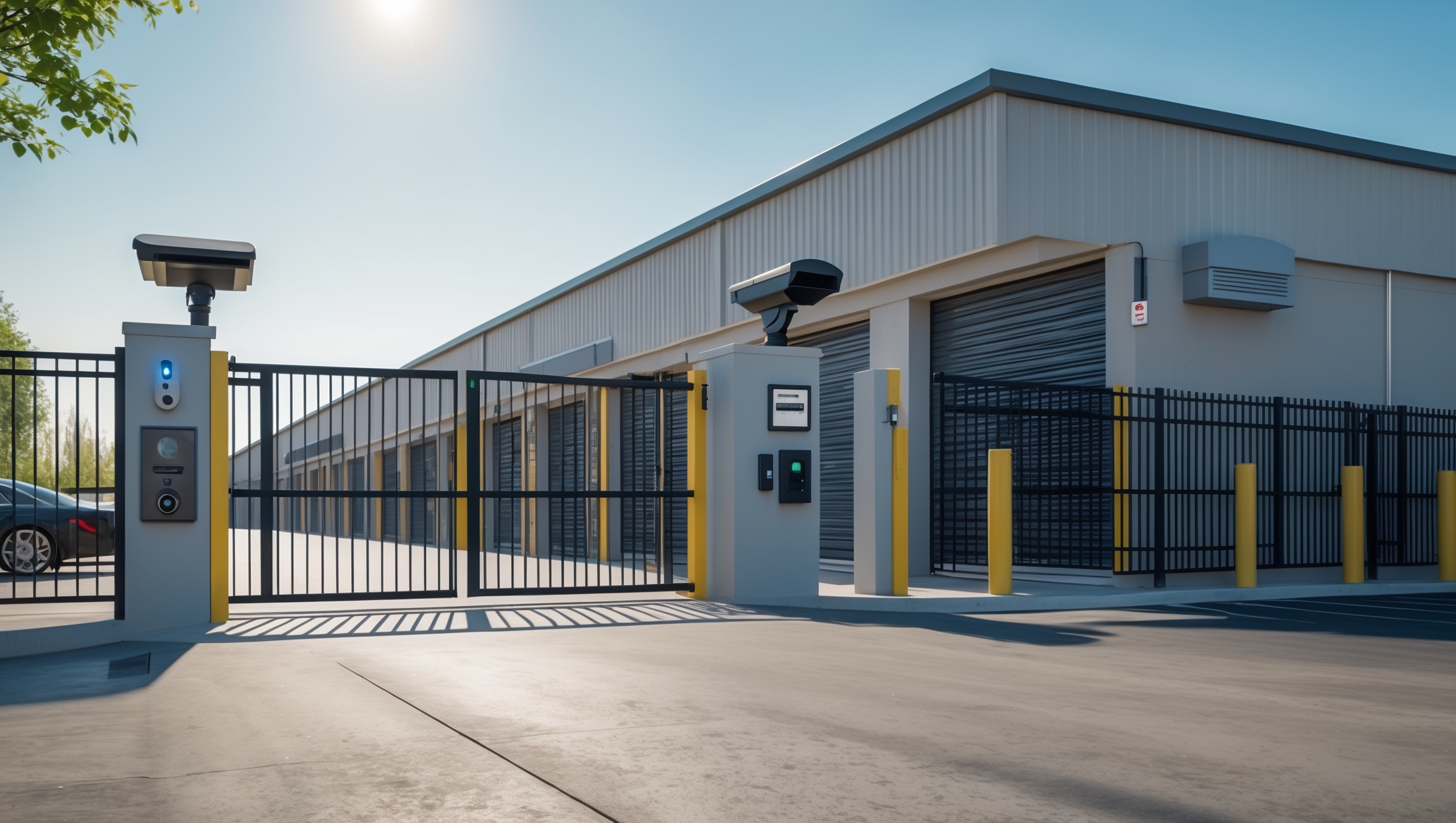
These are the first line of defense, controlling who enters and exits the property. Modern gate systems feature:
- Keypads with unique PINs per customer
- RFID card/fob readers for quick, contactless entry
- License plate recognition cameras for automated vehicle access
- Integration with property management software for seamless customer onboarding/offboarding
2. Individual Unit Access Control
Beyond the main gate, securing individual units is critical. Options include:
- Bluetooth-enabled smart locks, managed via mobile apps
- One-time or time-limited digital codes for temporary access (e.g., movers, contractors)
- Audit trails that log every access attempt, successful or failed
3. Facility-Wide Access Integration
Integrated systems connect gates, doors, elevators, and individual units. This holistic approach offers:
- Unified dashboards for real-time monitoring
- Automated alerts for unauthorized access attempts
- Remote lockdown capabilities during emergencies
4. Visitor and Vendor Management
Managing non-customer access is often overlooked. A robust system should:
- Allow temporary access codes for vendors or delivery personnel
- Log all visitor entries and exits
- Integrate with video intercoms for visual confirmation
Compliance and Regulatory Considerations
ADA Accessibility
The Americans with Disabilities Act (ADA) requires that access points—keypads, doors, elevators—be usable by people of varying physical abilities. Facility operators must ensure:
- Keypads are at accessible heights and operable with one hand
- Gates and doors operate with minimal force
- Visual and auditory signals are provided as needed
Data Privacy and Cybersecurity
Modern systems collect and store sensitive data—access logs, video footage, customer details. Compliance with data protection laws such as the California Consumer Privacy Act (CCPA) and, if applicable, the General Data Protection Regulation (GDPR) is crucial. Key steps include:
- Securing cloud-based data with encryption
- Limiting access to customer information to authorized personnel
- Providing transparent privacy policies and opt-out options
Fire and Emergency Egress
Access control systems must not impede emergency evacuations. Ensure that:
- All electronic locks fail-safe (unlock) in the event of power loss or fire alarms
- There are clearly marked manual override mechanisms
- Local fire codes and regulations are strictly followed
Choosing the Right Access Control Solution: A Step-by-Step Guide
Step 1: Assess Your Facility’s Needs
- Number of entry/exit points
- Volume and frequency of customer and vendor traffic
- Level of automation desired (e.g., 24/7 access, remote management)
- Integration with existing management or security systems
Step 2: Research Technology Providers
Not all systems are created equal. When comparing vendors:
- Request demo units or virtual demonstrations
- Confirm compatibility with your property management software
- Evaluate customer support and warranty terms
- Check for ongoing software updates and cybersecurity protocols
Step 3: Budgeting and Cost Considerations
- Initial hardware and installation costs—Expect a range from $5,000 to $50,000+ depending on facility size and complexity
- Software licensing or subscription fees—Cloud-based platforms often require monthly or annual fees
- Maintenance and upgrade expenses
- Potential insurance savings—Enhanced security can lower premiums
Step 4: Implementation and Staff Training
- Schedule installation to minimize customer disruption
- Create detailed training materials and sessions for staff
- Conduct full system tests before going live
- Gather feedback for post-launch improvements
Operational Best Practices for Access Control Management
1. Regular Audit and Access Log Reviews
Schedule weekly or monthly reviews of access logs to spot suspicious activity, system malfunctions, or patterns that could indicate security risks.
2. Customer Onboarding and Offboarding Protocols
- Automate code or credential assignment during move-in
- Instantly revoke access upon move-out or contract termination
- Educate customers about access procedures and security policies
3. Incident Response Planning
Prepare for lockouts, system failures, or breaches:
- Maintain manual override keys or codes in a secure location
- Establish clear reporting and escalation procedures
- Document all incidents for insurance and legal purposes
4. System Maintenance and Updates
- Schedule routine inspections for hardware wear and tear
- Apply software updates promptly to patch security vulnerabilities
- Test backup power supplies and fail-safe mechanisms regularly
Emerging Trends in Access Control for Storage Facilities
Mobile and Self-Service Enhancements
Customers increasingly demand self-service options. Mobile apps allow:
- Remote access granting to friends or movers
- Contactless billing and entry
- Real-time notifications of access events
AI and Analytics
Artificial intelligence tools can analyze access data to:
- Detect unusual usage patterns
- Automate maintenance scheduling
- Optimize staffing and surveillance placement
Integrating Access Control with Other Facility Systems
Modern access control platforms can now integrate with:
- HVAC systems, to optimize climate control based on occupancy
- Lighting, for energy savings and enhanced safety
- Customer relationship management (CRM) tools, to streamline communication
Common Access Control Mistakes and How to Avoid Them
1. Failing to Update Access Credentials
Neglecting to revoke access codes after a customer leaves or an employee departs is a common vulnerability. Automate credential expiration and conduct quarterly audits.
2. Overlooking Physical Security Weaknesses
Even the best digital system can be undermined by weak doors, fences, or window locks. Pair access control with robust physical barriers and regular inspections.
3. Underestimating Training Needs
Staff who don’t fully understand the system can inadvertently create security gaps. Provide ongoing training, not just one-time onboarding.
4. Ignoring Redundant Power and Connectivity
Power outages or internet disruptions can lock out customers and staff. Ensure backup power supplies and offline operation modes are in place and tested.
Case Example: Streamlining Access at a Multi-Location Storage Operator
Consider the case of SecureSpace Storage, a mid-sized operator with seven locations across three states. Previously, each facility had a different gate code system and no centralized oversight. This led to frequent customer confusion, security lapses, and high administrative overhead.
After migrating to a cloud-based access control platform with unified credentials, SecureSpace reported:
- A 60% reduction in access-related service calls
- Real-time visibility into all facility access events
- Remote lockdown capability during a local security incident
- Positive customer feedback for improved convenience and transparency
This example underscores the operational and competitive advantages of investing in modern, scalable access solutions.
Conclusion: Making Access Control Your Facility’s Competitive Advantage
As the storage and moving industry continues to modernize, access control is no longer just about keeping unwanted visitors out—it’s about delivering a seamless, secure, and confidence-inspiring customer experience. With theft tactics evolving and regulatory scrutiny intensifying, robust access control can make the difference between a facility that attracts loyal customers and one that lags behind.
By understanding the types of access control systems available, ensuring compliance with legal and safety requirements, and following best practices in implementation and maintenance, facility operators can reduce risk, cut costs, and enhance operational efficiency. Embrace emerging technologies such as mobile access and integrated analytics to future-proof your business, and view access control as an ongoing investment rather than a one-time upgrade.
Ultimately, the most successful storage facilities will be those that view access security as a dynamic, customer-oriented process. By proactively addressing vulnerabilities, training staff, and leveraging technology, you can transform access control from a basic necessity into a core pillar of your facility’s reputation and profitability.